What Is a Dental Implant Prosthetic?
If you are reading this article, perhaps your dentist recently mentioned that you might need a dental implant prosthetic. This phrase may sound a bit intimidating at first, but rest assured that it is a simple and common solution to many different dental health and cosmetic issues.
Introduction to dental prosthetics
Whether you know it or not, chances are that you have encountered someone who has a prosthetic at some point in your life. In most cases, the term is used to refer to a limb replacement, usually an arm or a leg. Roughly two million Americans have a prosthetic limb, so in most cases, people think of a major body part when they hear the term.
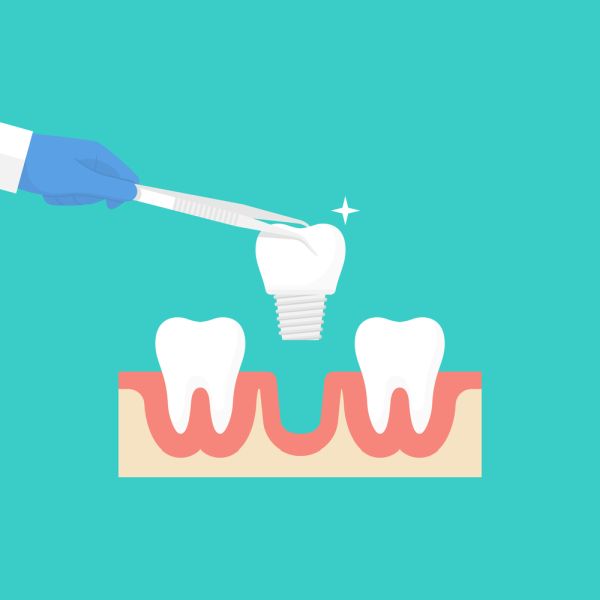
When it comes to dental implants, however, a prosthetic refers to an artificial tooth. By definition, a prosthetic is an artificial part of the body, and when you are discussing a dental implant prosthetic, you are referring to two different parts, the metal insert that connects to the jawbone and the actual tooth itself.
Titanium is tops
In most cases, the metal that a dentist inserts into your jawbone when you are getting a dental implant will be made of titanium oxide. Titanium is the preferred metal for two main reasons: It is a strong metal that provides durable support for your implants, and it fuses naturally with the jawbone. Unlike other metals, titanium oxide will not corrode inside your mouth or react with bodily fluids. This allows it to form a bond with your jawbone and create a strong base that your implant needs to stay in place.
If you happen to be allergic to titanium, there is still a solution. Zirconia can be used, though it is more prone to cracking than titanium and is typically only used as a last resort.
Porcelain protection
Generally, your dentist will use a porcelain crown to go along with the titanium abutment, and strength is again one of the biggest reasons. Not only does porcelain look and feel like a real tooth, but it is even stronger than a real tooth. One of the biggest benefits to dental implants over dentures is bite quality. While dentures struggle to come anywhere close to the performance of real teeth, dental implants perform on par or even better than real teeth, allowing you to get back to enjoying healthy foods that can protect the rest of your natural teeth!
Am I eligible for a dental implant?
Generally, dental implants are available to anyone who has enough bone density in their jawbone to be able to support the connection between the jawbone and the abutment. If the jawbone is too weak to support a connection, the implant will fail. When you opt for dental implants, your dentist will check your current oral situation to make sure your jawbone can support such a procedure. Your dentist will only proceed if they are sure that your jawbone is able to support the implant, which is one reason that dental implants have such a high success rate.
If you think you would be a good candidate for dental implants, then you should speak to your dentist. Be sure to let them know you would like to learn more about dental implants and how they can help you improve your oral health; your results will be something to smile about!
Let's get started
Request an appointment here: https://brimhalldentalgroup.com or call Brimhall Dental Group at (661) 249-1122 for an appointment in our Bakersfield office.
Check out what others are saying about our services on Yelp: Read our Yelp reviews.
Recent Posts
Dental crowns are a widely used tooth restoration solution in general dentistry. However, it is common to have questions about crowns if it is your first time getting one. Exploring the answers to these questions is the first step in helping you prepare for an upcoming dental crown appointment.Dental crowns are caps that fully encase…
Both partial dentures and dental implants can replace missing teeth, but the right option depends on oral health, comfort goals, budget, and long-term treatment needs. However, it is important not to delay the decision, as missing teeth can affect chewing, speech, bite balance, and the appearance of the smile. In a single appointment, we can…
A dental crown's longevity depends on material strength, bonding quality, and diligent home care, yet even a precisely fitted restoration eventually reveals clues of fatigue. Recognizing subtle warnings in the earliest stage prevents painful complications and safeguards the surrounding oral structure. Note that eventually, all dental crowns will need to be replaced. However, reviewing the…
When restoring front teeth that are chipped, cracked, or worn, dental crowns and veneers are two of the most common options. Dental crowns offer full coverage and structural support, while veneers are a more conservative solution designed for cosmetic enhancement. Choosing between the two depends on the severity of the damage, aesthetic goals, and long-term…