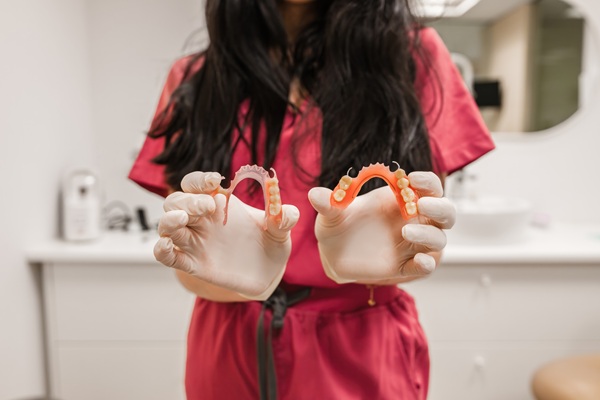
Both partial dentures and dental implants can replace missing teeth, but the right option depends on oral health, comfort goals, budget, and long-term treatment needs. However, it is important not to delay the decision, as missing teeth can affect chewing, speech, bite balance, and the appearance of the smile. In a single appointment, we can evaluate the teeth, gums, bone support, and spacing before recommending the most suitable solution.
Understanding partial dentures
Partial dentures are removable appliances that replace one or more missing teeth. They usually include replacement teeth attached to a gum-colored base, along with clasps or connectors that help the appliance stay in place. Partial dentures can fill gaps when several teeth are missing in different areas of the mouth.
This option often works well for patients who need a more affordable tooth replacement solution. Partial dentures can also be designed when remaining teeth do not support a fixed bridge or when multiple gaps make separate restorations less practical. That said, since they are removable, partial dentures require daily cleaning and regular dental visits to check fit and comfort.
A look at dental implants
Dental implants offer a more permanent smile restoration by replacing missing tooth roots with small posts placed in the jawbone. After healing, the implant post can support a crown, bridge, or implant-supported denture. This structure allows the restoration to remain securely anchored instead of resting on the gums.
In addition, dental implants can provide stability during chewing and speaking. They may also help support the jawbone in the area where the tooth is missing by transferring chewing forces into the bone. Keep in mind that implants require oral surgery, healing time, and sufficient healthy bone and gum tissue to support the post.
Key differences between the two
Comfort and daily function
Due to their different designs, comfort varies with each option. Partial dentures rest on the gums and may shift slightly during meals or conversations, especially if not installed properly or when the fit changes over time. However, a well-made partial can still restore chewing ability and appearance. Certain foods may simply require extra care.
Dental implants often feel more secure because they connect directly with the jawbone. This stability can make it easier to bite and chew a wider range of foods. However, implant treatment involves a months-long process and may not be appropriate for every patient.
Appearance and smile design
Both options can improve the appearance of a smile by filling visible gaps. A partial denture can match the color and shape of nearby teeth, helping the smile look more complete. Cosmetic planning can also help the appliance blend with the gumline and natural tooth contours.
The dentist can also customize the implant restoration to match the surrounding teeth. Since they are fixed in place, they may create a more natural feel for some patients. Keep in mind that our dentist can consider tooth shade, spacing, smile symmetry, and bite alignment when planning either treatment.
Oral health and bone support
The health of the gums and jawbone plays an important role in determining which tooth replacement option is most suitable. Partial dentures do not require invasive surgery, so they may be a practical choice for patients with limited bone support or medical concerns that make implant placement less suitable. The dentist still checks the remaining teeth and gums because they provide support for the appliance.
Dental implants need healthy gums and enough jawbone for stable placement. Some patients may need bone grafting or gum treatment before implant surgery. A complete exam and imaging can help determine whether implants are possible now or whether additional preparation is necessary.
Factors that help guide the choice
The most ideal option goes beyond the number of missing teeth and aesthetic preferences. A dentist considers the following factors:
- Number and location of missing teeth
- Health of the gums and jawbone
- Condition of remaining natural teeth
- Budget and desired treatment timeline
- The body's ability to heal
- Preference for removable or fixed tooth replacement
Again, a consultation helps compare the benefits and limitations of each option and determine whether a patient is eligible for one option over the other. In some cases, implant-supported partial dentures may provide a middle ground by combining removable replacement teeth with added implant stability.
Schedule a consultation
Partial dentures and dental implants can both restore missing teeth, but they offer different benefits in terms of comfort, function, appearance, and long-term planning. Our dentist can review your oral needs and explain which option best supports your goals. With the right treatment plan, partial dentures or dental implants can help restore a fuller smile and improve daily confidence. Simply call our office and schedule a consultation to get started.
Request an appointment here: https://brimhalldentalgroup.com or call Brimhall Dental Group at (661) 249-1122 for an appointment in our Bakersfield office.
Check out what others are saying about our dental services on Yelp: Partial dentures in Bakersfield, CA.
Recent Posts
Considering dental implants? Read on to learn about the process from an implant dentist. Bone growth and healing are essential parts of the implant dentistry process. It can take time for the bone to grow and heal around the implant after it has been placed, so understanding what to expect and how long it typically…
Implant dentists restore the appearance, function, and oral health of patients' smiles by replacing missing teeth. What makes implant dentistry unique is the use of dental implants, which are essentially artificial tooth roots that hold replacement teeth securely in the proper permanent position.Many have heard of implant dentistry but are not entirely familiar with what…
A dental implant is the closest you can get to a real tooth. It is placed in the jaw in a minor surgical procedure. Inside the jaw, the implant fuses with the surrounding bone tissue and takes over some of the functions that were performed by the root of the missing tooth. This is to the…
More and more people are considering dental implants surgery these days in order to replace teeth that are missing. While the procedure is relatively straightforward, invasive surgery is required to efficiently place the implants. It is helpful to be aware of the pre-op instructions for the procedure.Patients who are considering dental implants or have surgery scheduled…